Woodland Thinning in Charlotte, NC
A crowded stand of trees isn't a healthy one. When dozens of thin, leaning stems compete for the same light and water, most of them struggle, and the few trees that could become big, healthy hardwoods don't get the room they need.
Woodland thinning removes the suppressed, dead, and overcrowded stems so the best trees on your Charlotte property have room to grow. Your woods open up, and the trees that are left get more of the light and space they need.
- Best hardwoods kept & given room
- Dead & suppressed stems removed
- Mulched in place, no haul-off
Get a Free Woodland Thinning Estimate
Tell us about your woods and what you'd like them to look like. We'll call within one business day.
Thanks, we've got it.
Thanks. We'll call within one business day to set up a time to walk your woods together.
- Owner on Every JobHe walks the stand and runs the machine
- Licensed & InsuredCertificates provided on request
- Free On-Site EstimatesKeeper trees marked together
- Best Trees KeptWe thin around your strongest hardwoods
What Our Woodland Thinning Process Is
Thinning is about choosing what stays. These four steps make sure the right trees come out and the best ones get room.
-
01
Assess the Stand
We walk your woods and look at which trees are healthy, which are struggling, which are dead, and where they're most crowded.
-
02
Mark the Keepers
Together we mark the strongest hardwoods and any trees you want for shade, wildlife, or looks.
-
03
Thin Around Them
We mulch the suppressed, dead, and crowded stems within mulcher range, working carefully around the keepers.
-
04
Look It Over
We walk the thinned stand with you to make sure the spacing and look match what you wanted.
Where We Serve for Woodland Thinning
We thin wooded properties across Charlotte and the nearby towns below. Town pages are on the way. Start with the main forestry mulching page for the full service area.
Why Thinning Helps the Woods Around Charlotte
How Woods Get Overcrowded
A lot of wooded land around Charlotte grew up on its own after farming or logging stopped decades ago. When that happens, hundreds of seedlings sprout on every acre, and they all race upward for light. Over time, a handful pull ahead while the rest stay thin, shaded, and stressed. The result is a stand of tall, skinny poles with small crowns, crowded together with dead and dying stems mixed in. It looks dense, but it's rarely healthy.
What We Take Out
Thinning focuses on stems that aren't pulling their weight: suppressed trees shaded out beneath the canopy, dead and dying stems, trees that are badly bent or forked, and trees crowded so close together that neither can grow a full crown. Sweetgum, red maple, and Virginia pine often make up a big share of what we remove in mixed Piedmont woods. Very large trees are beyond what a mulcher handles, and those are typically left standing or handled differently.
What We Keep
The point of thinning is to favor the trees you want to see in twenty years. That usually means healthy oaks, hickories, tulip poplars, and other well-formed hardwoods with good crowns. We also keep trees that matter to you for other reasons: a dogwood by the trail, a cluster of beeches, or a big den tree that wildlife use. We mark these together before any work begins.
Better Growth and Better Views
With less competition for sunlight, water, and nutrients, the remaining trees can grow fuller crowns, and they're often better able to cope with stress from drought and pests. Thinning also makes the woods more pleasant to be in. You can see farther, walk between the trees, and actually notice the big hardwoods instead of a blur of thin trunks. Many owners combine thinning with underbrush clearing for a cleaner, more open look.
Know What to Expect
Thinning is a judgment call, and the right amount depends on your goals. Some owners want a light touch that barely changes the look of the woods, while others want a much more open, park-like stand. If you're managing timber for income or need a formal forest management plan, a consulting forester or the North Carolina Forest Service can help with that side of things. We focus on the hands-on thinning work you can see and use.
Soil, Slopes, and the Rules
Because thinning leaves the roots of removed stems in the ground and covers the soil with mulch, it disturbs very little dirt, even on slopes. If your woods run along a creek, Mecklenburg County stream buffer rules may limit clearing near the water, so confirm with the county before we work there. Charlotte's tree ordinance is aimed mainly at commercial and new development, but confirm with the city if you're unsure whether it applies to your lot.
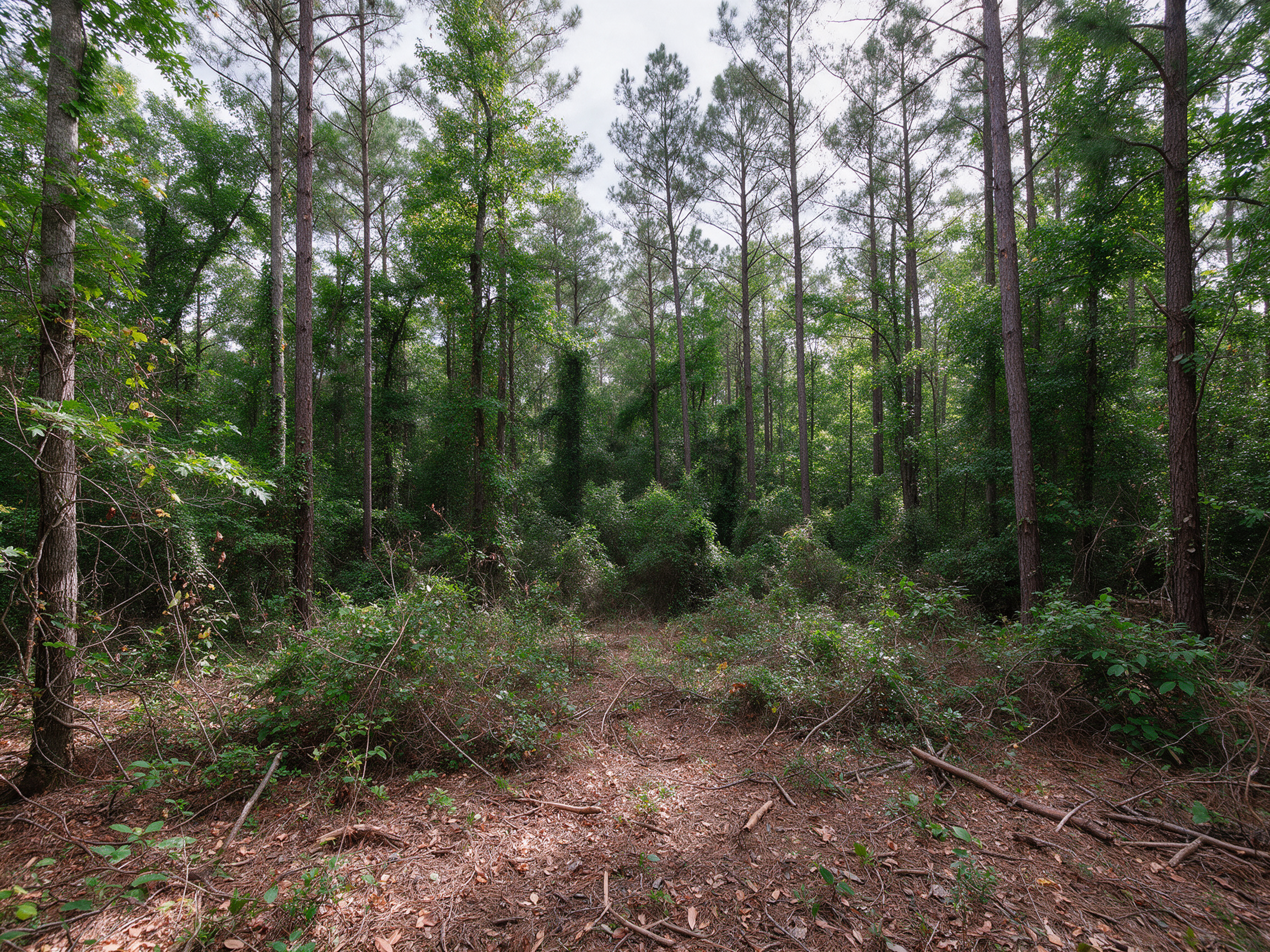
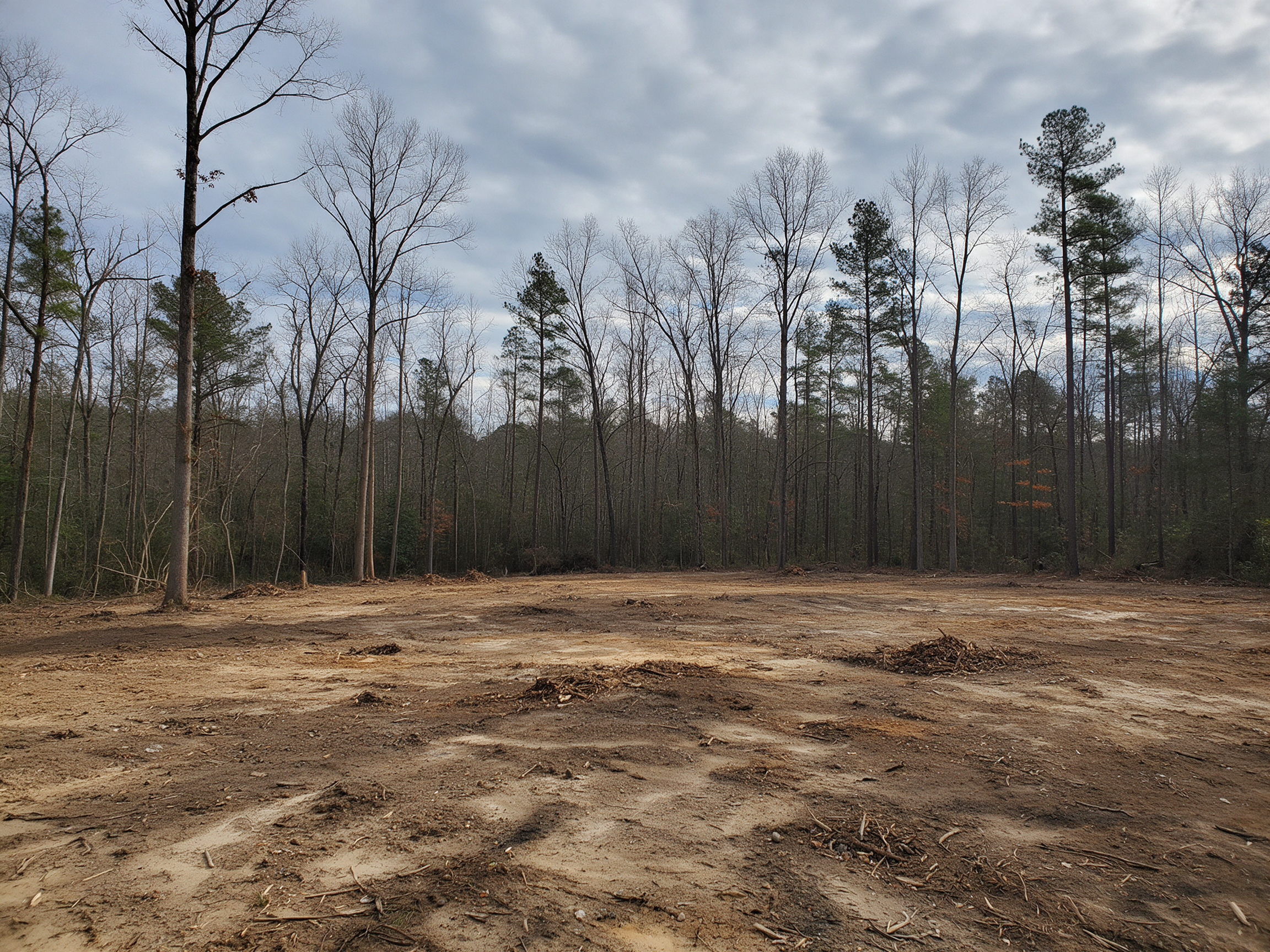
Woods feel crowded?
Walk them with us. We'll show you which trees are worth keeping and how the stand would look thinned.
Plan My ThinningOther Services We Provide in Charlotte
Woodland thinning is one of our eight forestry mulching services in Charlotte. Here's everything else we offer, grouped by category.
Why Charlotte Owners Choose Us to Thin Their Woods
Keepers Chosen With You
We mark the trees you want to keep together, so nothing important comes down by surprise.
As Light or Open as You Want
From a light cleanup to a much more open stand, we thin to your goals, not a formula.
Gentle on the Ground
Roots stay in, mulch covers the soil, and the forest floor isn't torn up by repeated passes.
Careful Machine Work
The owner runs the mulcher and works slowly around keeper trees to avoid scraping bark or roots.
Thinning is one of the most rewarding things you can do for a wooded property, but it only works when the right trees stay. We spend time with you choosing them, then thin carefully around them so your woods get healthier and more enjoyable every year.
Charlotte Woodland Thinning FAQs
What is woodland thinning?
It's the selective removal of weaker, dead, or crowded trees so the healthiest trees in a stand get more light, water, and space to grow.
How is thinning different from underbrush clearing?
Underbrush clearing removes the low layer of brush and saplings beneath the canopy. Thinning removes some of the trees themselves, mostly the suppressed, dead, and crowded stems, to give the best trees room.
Which trees do you remove?
Mostly suppressed, dead, dying, badly formed, and overcrowded stems within the size a mulcher can handle. We mark the trees you want to keep before we start.
Can you remove large trees?
Very large trees are beyond what a forestry mulcher is built for. We'll tell you during the walk-through which trees we can thin and which would need a different approach.
Will thinning make my woods healthier?
Thinning reduces competition, which usually helps the remaining trees grow fuller crowns and cope better with stress. It's one of the most common ways to improve a crowded stand.
How much should I thin?
It depends on your goals and the condition of the stand. We'll walk it with you and talk through options, from a light thinning to a more open look.
Do I need a forester?
For timber management, harvest planning, or a formal forest management plan, a consulting forester or the North Carolina Forest Service is a good resource. For hands-on thinning to improve the look and health of your woods, we can handle it directly.
What happens to the trees you remove?
They're mulched in place and spread across the forest floor, where the mulch protects the soil and breaks down over time. Nothing is burned or hauled away.
When is the best time to thin?
Late fall and winter are popular because the leaves are off, keeper trees are easier to assess, and the ground is often firmer. We thin year-round, weather permitting.
Take back your overgrown land.
Free walk-through and written estimate for forestry mulching in Charlotte.